Real people with type 1 diabetes, sharing live glucose through training and life.
Creators
Learn about type 1 diabetes
Plain-language answers about type 1 diabetes, continuous glucose monitors and how training moves blood sugar. General information, not medical advice.
What is type 1 diabetes?
Type 1 diabetes is an autoimmune condition: the body stops making insulin, so people with it replace insulin every day and watch their glucose closely. It isn’t caused by diet or lifestyle, and it’s different from type 2 diabetes. It can start at any age.
How does a CGM work?
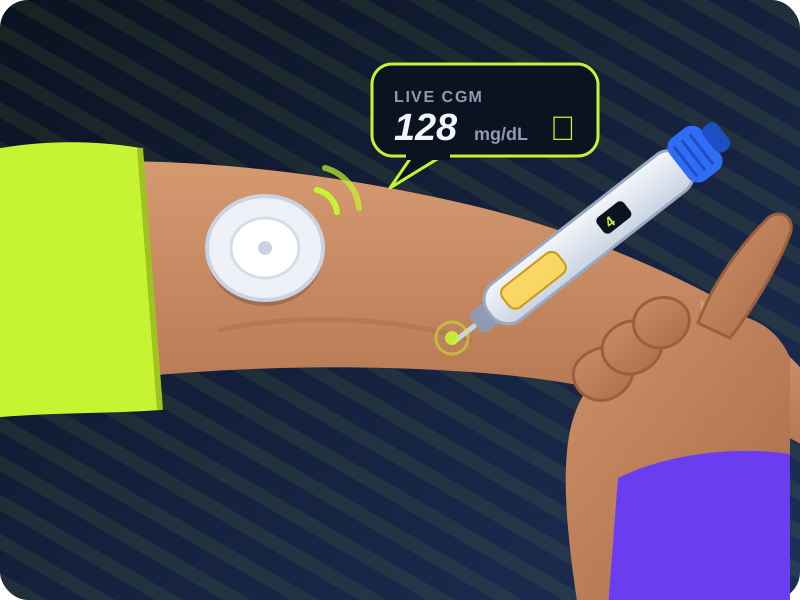
A continuous glucose monitor (CGM) is a small sensor worn on the skin, often on the upper arm. It measures glucose in the fluid under the skin every few minutes and sends it to a phone, showing which way glucose is heading, not just one number. Readings can lag a little behind blood glucose when levels change fast.
How to read a creator’s chart
The line is glucose over time. The green band is the creator’s target range (often 70 to 180 mg/dL). Red sections are above it, purple below. Coloured strips show what was happening, like a meal or a boxing session, and small circles mark conversations. Readings appear a little late on purpose, so nobody sees exactly where a creator’s glucose is right now.
Exercise and blood sugar
Training can push glucose up or down depending on the type, intensity and timing. Hard, short efforts like sparring or heavy lifting can raise it for a while; long steady runs often bring it down, sometimes hours later. Every body is different, which is exactly why seeing real days is useful.
Words you’ll see
- Time in range
- The share of the day spent inside the target range. A common goal is 70% or more.
- Hypo (low)
- Glucose below range, usually under 70 mg/dL (3.9 mmol/L). It can make someone shaky, sweaty or confused and needs fast-acting sugar.
- Hyper (high)
- Glucose above range, usually over 180 mg/dL (10 mmol/L).
- Basal and bolus
- Basal is background insulin through the day; bolus is extra insulin for meals or corrections.
- mg/dL and mmol/L
- Two units for the same thing. India and the US mostly use mg/dL; many other countries use mmol/L. Divide mg/dL by 18 to get mmol/L.
Trusted organisations
For medical guidance, talk to your own doctor or diabetes educator. For information and support:
For brands
Sponsor Live Glucose Tracker
Reach people living with type 1 diabetes, the athletes among them, and the families and friends who follow along, with real data and honest stories.
Where your brand can appear
“Sponsored by” your brand, with your logo, in the corner of the featured creator card: the first thing every visitor sees.
A labelled sponsor spot beside a creator’s live chart, and your product tagged in real training sessions.
Stories and reels with creators, always marked as paid partnerships.
Your logo on the patch over a creator’s sensor, visible in training photos and videos.
Our rules
- Every placement is clearly labelled as sponsored.
- No medical or health claims about sponsored products, and nothing that tells people how to manage their diabetes.
- Creators choose which brands they work with.
Contact us
Questions, a creator account problem, a sponsorship idea or something to report: reach out either way.
Good to know
- Forgot your password? Use “Forgot password?” on the log in page, or message us here; we’ll send you a one-time reset link.
- Want your own page? Create it here. It goes live after a quick review.
- Seen something wrong? Use “Report” under a comment, or tell us which page and what you saw.
- Medical emergency? Please call your local emergency number. We can’t give medical advice.
About
Type 1 diabetes, out in the open
Live Glucose Tracker began with one person living with type 1 diabetes (@sugarless_biceps) who stays fit through a mix of strength training, combat sports and endurance running, managing glucose with a CGM along the way. It has grown into a place for anyone with type 1 who keeps active, whatever their sport, to show what that really looks like.
Most people never see what managing type 1 looks like day to day: the cheat-meal spike, the drop in round three, the long-run low. So the idea was simple: share the real numbers live, next to the real training and food, and let people talk about it.
How it works
- Creators share their own data. Each page shows a creator’s CGM readings, slightly delayed, with their activities, training week and races.
- Anyone can follow along. Visitors don’t need an account to watch, react or comment.
- Every comment is checked before it appears, and medical or dosing advice isn’t allowed.
- Creators stay in control. They pick their delay, can pause or delete everything, and every new page is reviewed before it goes live.
This is personal experience, never medical advice. Built and run in India 🇮🇳.
Thanks
This platform stands on the shoulders of the #WeAreNotWaiting community: people with diabetes and their families who built open tools to see and share their own data, instead of waiting for someone else to.